SURF plaatst functionele cookies om deze website goed te laten werken. Ook plaatsen we analytische cookies om de website te verbeteren. De data wordt waar mogelijk geanonimiseerd.
Ingesloten content (zoals YouTube-video's) kan cookies van derde partijen bevatten. Wil je deze cookies van derden toestaan?
Op maandag 28 september organiseerden we de eerste open inputsessie voor MORIS. De 29 aanwezigen en wij hebben een interessante en volle middag besteed aan de eerste stappen in de richting van een modulair open onderzoeksinformatiesysteem.
We hebben de governance opgesteld voor de pilot van MORIS. In de governance leggen we vast welke personen en instellingen en op welke manier met elkaar samenwerken aan de pilot van MORIS.
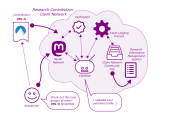
In this whitepaper, Patrick Hochstenbach (Ghent University Library), Thomas van Himbergen (SURF), Laurents Sesink (SURF) and Herbert Van de Sompel (DANS) introduce the Research Contribution Claim Network, a solution that leverages the Mastodon social network to provide a trustworthy approach for automatically cataloguing non‑traditional scholarly contributions, and thereby paving the way for their inclusion in novel assessments of research impact.
PID to Portal project update — April 2026
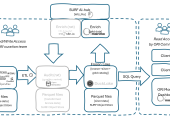
A few months ago, we published a post about experimenting with a next-gen ORI data infrastructure — an open, serverless data lake built on DuckDB, Parquet, and SURF Object Store, designed to power national Open Research Information monitoring. At the time, we were testing whether the architecture was even viable. Today, we have an update: the lake has data in it, and you can now talk to it in plain English.
How complete, accurate and open is the research information we rely on every day? A new report from the PID-to-Portal project introduces the ORI Monitoring Framework, a use-case driven approach to understanding and improving the quality of Dutch open research information. Developed together with the Dutch Barcelona Declaration Network, the framework will help set priorities on what elements to monitor and improve, and why that is important by linking it to use cases that bring the value of using open research information. This framework is a crucial starting point to enable monitoring to identify metadata gaps, and how we can work together to close them. 📄 Read the report
On 9 February, the ORI community gathered at Saxion University of Applied Sciences in Deventer for an inspiring and energising meet-up. We are incredibly grateful to our hosts at Saxion for their warm welcome. Finding the main entrance, the theater and the rooms for the breakouts was a challenge, but our ORI community has problem solving as a key skill, no one got super lost.
And of course, no visit to Deventer would be complete without the famous Deventer Bijtje, a spiced reminder that building a commons also happens in the informal moments between sessions.
In late 2025, the Netherlands Barcelona Declaration Network met in Leiden to reflect and set priorities for 2026. This blog outlines those priorities and highlights how the growing network of universities, funders, and research infrastructures advances open, community-governed research information.
In the PID2Portal project we want to monitor the completeness, accuracy and openness of research information in the Netherlands. This has been discussed last Monday with the Dutch signatories of the Barcelona declaration. To make that happen, we’re experimenting with a next-generation Open Research Information (ORI) data infrastructure to support that use case for ORI Monitoring. Using an open, reproducible stack (DuckDB/DuckLake, Marimo, OpenMetadata, and AI-assisted enrichment), all based on SURF infrastructure components (Research Cloud, S3 Block Storage, AI-Hub), we’re testing what works in practice. This experimental stack provides relevant input for the BROCCOLI project, and is combining the knowledge and insights of research intelligence units from multiple institutions who were experimenting with Azure, DataBricks and BigQuery.