SURF plaatst functionele cookies om deze website goed te laten werken. Ook plaatsen we analytische cookies om de website te verbeteren. De data wordt waar mogelijk geanonimiseerd.
Ingesloten content (zoals YouTube-video's) kan cookies van derde partijen bevatten. Wil je deze cookies van derden toestaan?
On 6 October 2026, SURF kicks off the Tech Trends report 2028 project together with 18 curators from across the education and research sector. The curators represent vocational education, universities of applied sciences, research universities and university medical centres.
Sinds augustus 2024 is de AI Act van de Europese Commissie van kracht. Deze wetgeving heeft ook grote gevolgen voor het onderwijs. AI-systemen die in het onderwijs worden gebruikt, vallen snel onder de categorie “hoog risico.” Om onderwijsinstellingen te helpen zich hierop voor te bereiden, organiseert Npuls op 25 september een interactieve workshop tot de Europese AI-verordening en de implicaties voor het onderwijs.
Op dinsdag 22 september vindt de DEDA workshop plaats via de Publieke Waarden Academie van Npuls.
De Data School van de Universiteit Utrecht heeft de Ethische Data Assistent (DEDA) ontwikkeld, die data-analisten, projectmanagers en beleidsmakers helpt om samen ethische én praktische problemen te herkennen in data & AI projecten. Deze workshop is georganiseerd om DEDA optimaal te benutten en effectief in organisatieprocessen te integreren.
De leden van SURF werken continu aan het ondersteunen van flexibeler onderzoek en onderwijs in Nederland. Om toegang tot systemen van verschillende instellingen en online applicaties veilig in te richten, is samenwerking, standaardisatie en vertrouwen essentieel. Daarom werken we samen aan de toekomst van onze autonome digitale sectorvoorziening voor het beheer van identiteiten en toegang. Wat dat betekent lees je in dit blog.
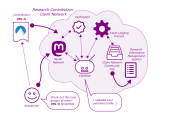
In this whitepaper, Patrick Hochstenbach (Ghent University Library), Thomas van Himbergen (SURF), Laurents Sesink (SURF) and Herbert Van de Sompel (DANS) introduce the Research Contribution Claim Network, a solution that leverages the Mastodon social network to provide a trustworthy approach for automatically cataloguing non‑traditional scholarly contributions, and thereby paving the way for their inclusion in novel assessments of research impact.
Vandaag publiceert het DCC-PO het position statement “Digitale soevereiniteit en publieke waarden in praktijkgericht onderzoek”. Met digitale soevereiniteit wordt hier bedoeld:
Het beschikken over zeggenschap, invloed, regie, keuzevrijheid en de benodigde innovatiekracht binnen de digitale omgeving.
In dit document doen zij een nadrukkelijke oproep aan hogescholen om de regie over hun digitale onderzoeksomgeving terug te pakken. Digitale soevereiniteit is geen abstract begrip, maar raakt direct aan de toegankelijkheid, betrouwbaarheid en onafhankelijkheid van praktijkgericht onderzoek.
When people say "make data FAIR" I wonder whether they mean doing extra paperwork after the fact, or changing how data are created so they’re FAIR from the start — #bornFAIR. Ideally, adding metadata should feel like a tiny, natural part of researchers’ normal workflows and should give them immediate benefits. We should be thinking about FAIR across the whole organization, not just at the end, making it much easier to work with and implement. I have a number of potential ideas that can make the FAIR process better for researchers and research-support and I would like to share them here and invite anyone to comment or reach out to see if we can collaborate.
In an experimental collaboration, the SURF Open Science Innovation Team and IMEC-IDLab at Ghent University in Belgium are exploring whether Mastodon can be used to semi-automatically collect information about any type of research contribution. The idea is to ask researchers to do little more than post a 'toot' on Mastodon mentioning such a contribution. Smart agents (named “claimbots”), developed by SURF and IMEC, will monitor these toots and handle the complex task of extracting metadata from such toots and populating research productivity portals.
Jij bent aan zet! De call for proposals voor de Onderwijsdagen 2025 is open en dat betekent dat je jouw ideeën in kunt dienen voor een presentatie, birds-of-a-feather sessie, een panelgesprek of een workshop.
Hoe houden we zelf zeggenschap over onze software? Boris van Hoytema, open source policy officer bij het ministerie BZK, en Wladimir Mufty, programmanager Publieke Waarden bij SURF, hebben daar een concreet antwoord op.
Lees het gehele artikel op: OpenSourceWerken.nl