SURF plaatst functionele cookies om deze website goed te laten werken. Ook plaatsen we analytische cookies om de website te verbeteren. De data wordt waar mogelijk geanonimiseerd.
Ingesloten content (zoals YouTube-video's) kan cookies van derde partijen bevatten. Wil je deze cookies van derden toestaan?
Ontdek trends en kom in contact met andere vakgenoten in HPC, AI, Machine Learning, Quantum en Data Science op 7 december in het Koninklijk Instituut voor de Tropen, Amsterdam. De toegang is gratis.
Hardware architecture improvements had relied on Moore's law and Dennard scaling for some decades. According to Moore's prediction, the number of transistors on a chip doubles almost every 18 months. According to Dennard scaling, as transistors become smaller, their power density stays constant. These allowed manufacturers to raise clock frequencies without significantly increasing overall circuit power consumption. Nowadays, Moore’s law is not happening as predicted, and Dennard scaling law is broken down. To address this, (homogeneous) multi-processors were invented, and opened a new era for parallel processing to gain better performance with a reasonable increase in power consumption. However, homogeneous multi-processors cannot keep up with high-demand application requirements such as low power, energy efficiency, and high performance.
In the ever-evolving realm of scientific research, the advent of Artificial Intelligence (AI) has been like the discovery of a new frontier. Yet, it isn't without its hurdles. This was a central topic during our panel session at SURF Research Day 2023, where we delved into the intricacies of employing machine learning as a research methodology.
Energy is an emerging topic in the scientific computing ecosystem and is becoming a design point for future research. Science relies increasingly on digital research computing as a tool for analysis and experimentation. The exponential increase in demand for computing means that classically designed ICT infrastructure will soon become unsustainable in terms of its energy footprint. We need to experiment with energy-efficient methods, tools, algorithms and hardware technologies. In the Netherlands, we are working towards zero energy waste for high-performance computing (HPC) applications on the national supercomputer “Snellius”. It involves discussing challenges, proposing new research directions, finding opportunities to engage the user community, and taking steps for the responsible use of software in research.
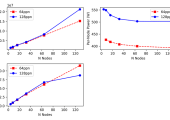
Traditionally, supercomputing focuses on improving latency or throughput, which are of massive importance for applications such as drug discovery or climate simulations. For many decades we developed infrastructure, algorithms, and software tools to obtain improvements. Given the rapid increase in energy usage for ICT services, further emphasised by the imminent energy crisis, it is a priority to understand and optimise the energy consumption of research computing applications
To know more, read the publication :
https://ercim-news.ercim.eu/en131/special/making-scientific-research-on…
Artificial Intelligence (AI) has revolutionized the research landscape, offering new methodologies and tools that have the potential to greatly enhance scientific discoveries. However, the adoption of AI in research also brings its own set of challenges, requiring new skills and a deep understanding of responsible AI practices. We need your insights to help us navigate this exciting yet complex field. Help us by filling in our 10-minute survey on responsible AI in research!
"Long-term society’s willingness to invest in HPC will depend on our ability to solve the most important societal and scientific problems, not in the ability to execute a subset of calculations that scale well to a billion of cores in a single run"
To solve challenges on a global scale, we need access to extraordinary computing capacity but we also need to build expertise, develop new approaches, explore new applications, etc. EuroHPC, based in Luxembourg, aims to achieve this in the near-term future. Its objective is to establish European leadership in HPC by jointly procuring exascale & pre-exascale supercomputers, managing open calls for application development and funding research and education collaboration across Europe.
Op woendag 14 september vindt er een informatiebijeenkomst over online onderzoeksomgevingen plaats. Aanleiding is de visie op online onderzoeksomgevingen die op 7 juli jl. is gepubliceerd. Zie het artikel op de community pagina voor oplossingen voor online onderzoeksomgevingen van 7 juli jl. Naast een toelichting op de visie staan er ook een aantal gastsprekers op het programma die zullen vertellen waar zij zich mee bezig houden voor hun instelling of organisatie voor het thema online onderzoeksomgevingen.
Op 28 juni is er een informatiebijeenkomst gehouden over het project deïdentificatie.
We willen vanuit het project de opname en de slides delen met geïnteresseerden uit andere communities.
Onder de Algemene verordening gegevensbescherming (AVG) hebben instellingen meer verplichtingen bij het verwerken van persoonsgegevens. Onder anderen door het beschermen van persoonsgebonden data, een methode hiervoor is pseudonimisatie. Maar hoe doen we dit efficiënt? Vanuit SURF is een project gestart, om de behoefte aan tools te verkennen die pseudonimisatie van data mogelijk maken voor onderzoekers binnen bij onderwijs-, zorg en onderzoeksinstellingen, genaamd ‘deïdentificatie’.
Tijdens deze informatiebijeenkomst willen we jullie graag meer vertellen over het initiatief deïdentificatie van data.
SURF Research Week is the national conference that connects research, IT and innovation. The event will take place on 10, 11 and 12 May 2022. You can sign up for just 1 or 2 days, or for the full 3 days. It's free!