SURF plaatst functionele cookies om deze website goed te laten werken. Ook plaatsen we analytische cookies om de website te verbeteren. De data wordt waar mogelijk geanonimiseerd.
Ingesloten content (zoals YouTube-video's) kan cookies van derde partijen bevatten. Wil je deze cookies van derden toestaan?
Een robot voor de klas? Gaan ontwikkelingen in Artificial Intelligence het onderwijs compleet veranderen? Wij gingen er over in gesprek met Inge Molenaar, assistant professor Educational Technologies aan de Radboud Universiteit. Luister de podcast op SURF Sounds.
Wat mist voor betrokkenheid in onderwijs op afstand?
Afgelopen week hebben we twee sessies gehouden met docenten en studenten om erachter te komen wat zij missen in onderwijs op afstand. Uit de sessies kwamen meer dan 480 post-its en 100 ideeën. Wij hebben ze samengevat in 10 inzichten die we met jullie willen delen.
Vraag jij je wel eens af: wie doet eigenlijk wat met learning analytics in Nederland? Wij ook. Om van elkaar te kunnen leren is overzicht nodig en daarom vraagt de SIG Learning Analytics om jouw input.
Promovendus Damien Fleur en zijn begeleiders ontvingen op 13 juni de Best Short Paper Award op de Intelligent Tutoring Systems conferentie (ITS2020) voor hun paper "Learning Analytics Dashboard for Motivation and Performance".
De bijdrage beschrijft een Learning Analytics-dashboard en een bijbehorende interventie die berust op doelgerichtheid en sociale vergelijking. De resultaten geven aan dat realtime dashboards technisch haalbaar zijn en tastbare voordelen voor studenten kunnen opleveren.
Damien werkt in een interdisciplinair project opgezet tussen de afdeling Informatica en Psychologie (beide van de Universiteit van Amsterdam). Het project wordt begeleid door Bert Bredeweg en Wouter van den Bos.
“Wanneer iets intelligent is, is natuurlijk een heel grijs gebied” - Caspar van Leeuwen
Sinds kort presenteert SURF Sounds de AI Innovators Podcast. Dé podcast over Artificial Intelligence voor onderwijs of onderzoek. Of, nouja, nog niet helemaal natuurlijk. Laten we het een experiment noemen!
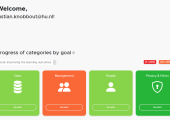
Wil jij onderwijs gaan verbeteren aan de hand van learning analytics maar lastig hiermee te beginnen? Of al op kleine schaal ervaring opgedaan en nu van plan op te schalen naar opleidings-, faculteits- of instellingsniveau? Wij (onderzoekers van de HU) kunnen helpen inzicht te krijgen in welke organisatorische vaardigheden met betrekking tot learning analytics al binnen de instelling aanwezig zijn en welke nog ontwikkeld moeten worden. Onlangs is het tijdens mijn promotieonderzoek ontwikkelde model – het Learning Analytics Capability Model – vertaald naar een praktische applicatie. Om het model en de applicatie in de praktijk te toetsen zoeken wij geïnteresseerden die werkzaam zijn binnen hoger onderwijsinstellingen om gedurende een dagdeel in kleine teams een implementatieplan voor de eigen instelling willen maken.
Beoogde deelnemers: beleidsmakers, ICTO-medewerkers, informatiemanagers, projectleiders, institutional researchers en data-analisten die bezig zijn of aan de slag willen met learning analytics binnen hun instelling in het hoger onderwijs.
Doel: gebruikmakend van de applicatie en onder leiding van een expert een learning analytics implementatieplan (‘roadmap’) voor de eigen instelling opstellen.
Planning: de sessie duurt een dagdeel en kan in overleg in augustus, september of begin oktober worden ingepland.
Onderzoek: de resultaten van de sessie worden in geanonimiseerde vorm gebruikt om een wetenschappelijk artikel over de validatie van het Learning Analytics Capability Model te schrijven.
Locatie: gezien de huidige omstandigheden zal deze sessie online plaatsvinden.
Geïnteresseerd of behoefte aan meer informatie? Neem dan contact op via justian.knobbout@hu.nl of 06 - 28 32 14 37.
De komst van Corona heeft het onderwijs in Nederland op vele manieren in korte tijd beïnvloed. Er is geen eindexamen, het BSA wordt uitgesteld en er wordt online lesgegeven en getoetst. Deze veranderingen roepen vragen op en in dit webinar bespreken we op welke manier je data-analyse kunt inzetten om de effecten hiervan te simuleren.
Host en techniek: Michel Jansen (SURF), Chat moderator: Iris Huis in ’t Veld (SURF)
Wil je het hele webinar terugkijken? Dat kan hier.
Hoe ziet het huidige aanbod van technologie aanbieders voor learning analytics eruit? Deze vraag vormde de basis voor een markt- en technologieverkenning. Op basis van de uitkomsten heeft SURF ambities geformuleerd voor learning analytics. Volg op donderdag 25 juni het webinar "verkenning en ambities learning analytics", waarin we de resultaten van het onderzoek presenteren en onze ambities aankondigen.