SURF plaatst functionele cookies om deze website goed te laten werken. Ook plaatsen we analytische cookies om de website te verbeteren. De data wordt waar mogelijk geanonimiseerd.
Ingesloten content (zoals YouTube-video's) kan cookies van derde partijen bevatten. Wil je deze cookies van derden toestaan?
Sinds augustus 2024 is de AI Act van de Europese Commissie van kracht. Deze wetgeving heeft ook grote gevolgen voor het onderwijs. AI-systemen die in het onderwijs worden gebruikt, vallen snel onder de categorie “hoog risico.” Om onderwijsinstellingen te helpen zich hierop voor te bereiden, organiseert Npuls op 25 september een interactieve workshop tot de Europese AI-verordening en de implicaties voor het onderwijs.
Op dinsdag 22 september vindt de DEDA workshop plaats via de Publieke Waarden Academie van Npuls.
De Data School van de Universiteit Utrecht heeft de Ethische Data Assistent (DEDA) ontwikkeld, die data-analisten, projectmanagers en beleidsmakers helpt om samen ethische én praktische problemen te herkennen in data & AI projecten. Deze workshop is georganiseerd om DEDA optimaal te benutten en effectief in organisatieprocessen te integreren.
De leden van SURF werken continu aan het ondersteunen van flexibeler onderzoek en onderwijs in Nederland. Om toegang tot systemen van verschillende instellingen en online applicaties veilig in te richten, is samenwerking, standaardisatie en vertrouwen essentieel. Daarom werken we samen aan de toekomst van onze autonome digitale sectorvoorziening voor het beheer van identiteiten en toegang. Wat dat betekent lees je in dit blog.
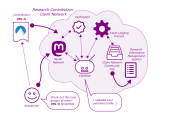
In this whitepaper, Patrick Hochstenbach (Ghent University Library), Thomas van Himbergen (SURF), Laurents Sesink (SURF) and Herbert Van de Sompel (DANS) introduce the Research Contribution Claim Network, a solution that leverages the Mastodon social network to provide a trustworthy approach for automatically cataloguing non‑traditional scholarly contributions, and thereby paving the way for their inclusion in novel assessments of research impact.
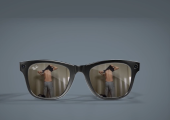
Back in March, we introduced you to students from HvA's Dark Tech Studio, tasked with deliberately building a piece of smart glasses functionality that should make us uncomfortable. Five months and four prototype iterations later, they handed over a finished advisory report and a workshop format that does exactly that. Here's what happened in between.
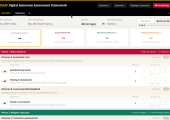
Universiteit Utrecht ontwikkelt tool om applicatielandschap te beoordelen op digitale autonomie.
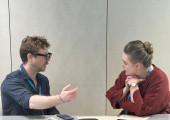
De aandacht voor digitale soevereiniteit van onderwijs en onderzoek groeit. Maar hoe kom je erachter hoe het is gesteld met de digitale autonomie van je organisatie? Een gesprek met Marije de Vries 🌐 🐘, strategisch kwartiermaker digitale autonomie, en Tim van Neerbos 🌐 🪪, lead enterprise architect – beide werkzaam bij Universiteit Utrecht.
Nog voordat de dag echt aanbreekt, doet de dauw al zijn werk. Het daalt neer over onze velden, niet als einddoel, maar als stille en noodzakelijke voeding voor alles wat later zichtbaar tot bloei komt binnen ons ecosysteem....
Once again, SXSW in Austin was an intense and inspiring week. As an experiment, I set out to use AI during the event as a thinking partner and to help write this blog afterward. More on that in the notes at the end.
What stood out this year is that the conversation about AI has fundamentally changed. In previous years it was mostly about applications, experiments and (promised) possibilities. AI appeared in every talk, but usually as a component, often in passing, because AI was simply trendy. This year was different. AI was back as the direct subject of conversation. Not as hype or a standalone technology, but as systemic technology: a foundation beneath everything.
In 2025, over seven million people bought Meta's Ray-Ban smart glasses. They look like ordinary eyewear. They record video and audio; it’s causing problems! The questions this raises are not hypothetical. Two Harvard students, and others, have demonstrated that footage from Meta Ray-Ban glasses could be linked to facial recognition systems to identify strangers in public. (Example 1, Example 2)
More recently, a joint investigation by two Swedish newspapers found that footage recorded by the glasses, including deeply private moments, is reviewed by human contractors in Kenya, with workers describing repeated exposure to bathroom visits, people undressing, and bank card details.
What makes these devices different is that the unwritten rules we rely on to navigate public space, eye contact, the phone on the table, the camera pointed at you, simply weren't written with this in mind. Moreover, the safety features put into the camera are being hacked and changed to be even more difficult to notice. So, what can we do? Article Cover Image from link
Digitale soevereiniteit, autonomie en publieke waarden, we kunnen er niet meer omheen... en dat is terecht.
Onderwijs en onderzoek zijn geworteld in waarden: voor studenten en leerlingen, voor professionals en voor instellingen. Samen vormen die waarden het fundament van onze samenleving. Als dat fundament onder druk staat... bijvoorbeeld door digitale afhankelijkheid of verlies aan autonomie, is het tijd om bewust stil te staan bij waar we voor staan en waar nodig te handelen.
Hieronder volgen acht artikelen uit begin 2026 die deze thematiek vanuit mbo, hbo, wo en het onderzoek belichten die in de media verschenen.
💡 Tip: heb je een artikel, TV programma of paper binnen deze categorie en thematiek: deel ze gerust in de comments (inloggen wel nodig).